
Speakers
and Student Programs
Seminar Day brings together Caltech’s brightest minds. Hear from faculty across all six divisions and watch talented students present their research.
Featured Speakers
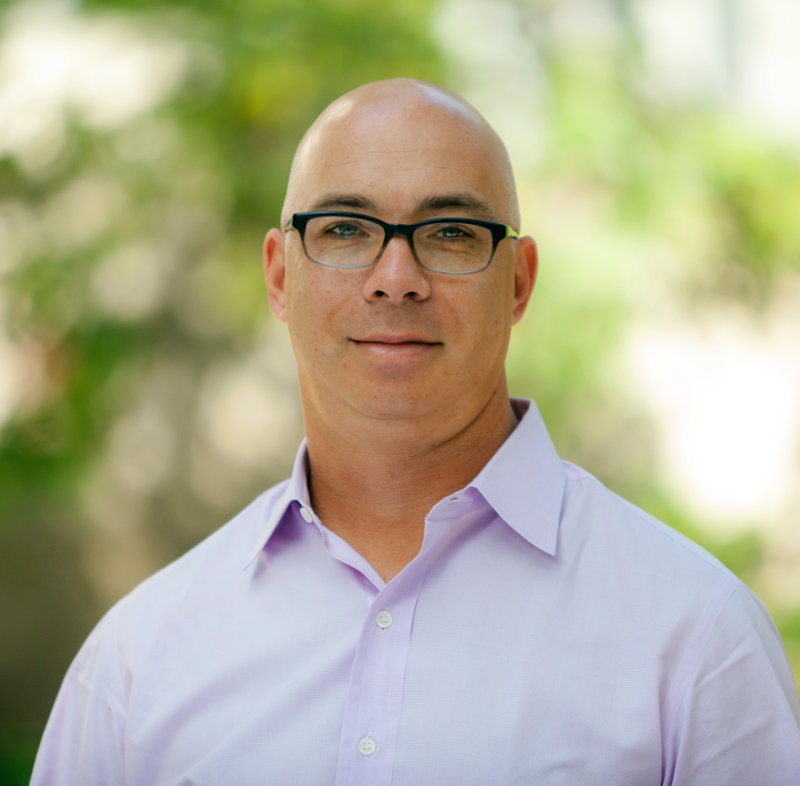
Jonathan Katz
Kay Sugahara Professor of Social Sciences and Statistics
Empirically Verified Universals of U.S. Electoral Politics
Elections are often treated as one-off stories, but U.S. legislative races exhibit striking regularities. In this talk, I show how we can identify “empirically verified universals” of electoral politics, patterns that hold across places and decades, and use them to answer practical questions about representation and redistricting. The core idea is to build a realistic, data-generating statistical model of district vote shares, rigorously test it using out-of-sample prediction, and then use the model to separate what we want to know (e.g., partisan bias, responsiveness, incumbency advantages) from how we estimate it, with uncertainty quantified in a principled way.
Biography
Jonathan N. Katz is the Kay Sugahara Professor of Social Sciences and Statistics at Caltech. His research develops statistical methods for the social sciences and uses them to answer substantive questions in political economy and political behavior, with a particular focus on elections and the evaluation of electoral systems.
Katz is Deputy Editor for Social Sciences at Science Advances (since 2018) and previously served as co-editor of Political Analysis (2010–2017). He also served as chair of Caltech’s Division of the Humanities and Social Sciences from 2007 to 2014 and has long been involved with the Caltech/MIT Voting Technology Project.
Beyond academia, Katz has an active statistical consulting practice that often centers on how quantitative evidence is generated, evaluated, and communicated in high-stakes settings, including election-related litigation. He has also served in datascience and advisory roles with start-ups and industry.
Katz is an elected fellow of the American Academy of Arts and Sciences and an inaugural fellow of the Society for Political Methodology; he also received the Society’s 2024 Career Achievement Award. He earned his S.B. in applied mathematics from Massachusetts Institute of Technology and his Ph.D. at the University of California, San Diego, and held a postdoctoral fellowship at Harvard University before joining the faculty at Caltech, after an appointment at the University of Chicago.
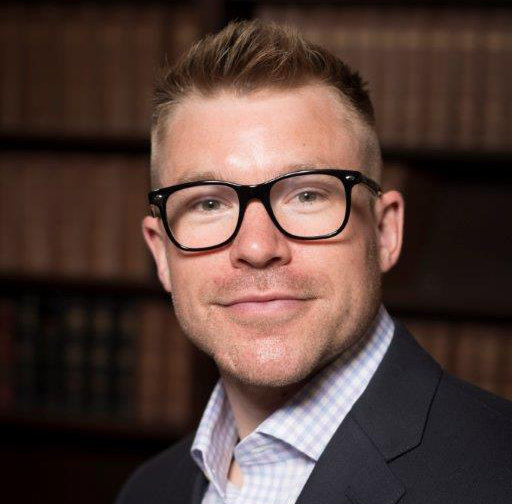
Ryan Hadt
Professor of Chemistry
Quantum Coherence as a Chemical Observable
Quantum coherence—the ability for quantum states to exist in well-defined superpositions—lies at the heart of emerging quantum technologies, yet direct experimental access to coherence in molecules remains limited by techniques poorly suited to complex chemical environments. This seminar will describe our development of time-resolved Faraday ellipticity (TRFE), a technique for measuring coherent molecular electron spin superpositions using extremely short laser pulses. This approach enables direct observation of coherence loss (decoherence) on picosecond timescales under ambient conditions. These measurements demonstrate how decoherence serves as a quantitative reporter of local chemical environments. More broadly, TRFE represents a step toward converting spectroscopic coherence into spatially-encoded information, analogous to how magnetic resonance imaging (MRI) transformed nuclear spin relaxation from a spectroscopic observable into a powerful tool for spatially-resolved discovery.
Biography
Ryan G. Hadt received his BS and MS degrees in chemistry at the University of Minnesota Duluth (with V. N. Nemykin) and his PhD at Stanford University (with E. I. Solomon). He was a visiting postdoctoral fellow at Harvard University (with D. G. Nocera) before continuing research at Argonne National Laboratory as a postdoctoral appointee (with L. X. Chen) and later as an Enrico Fermi Fellow. He was promoted to Professor of Chemistry in the Division of Chemistry and Chemical Engineering at the California Institute of Technology in 2025. Professor Hadt is a recipient of the Sloan Research Fellowship, NSF and DOE Early Career Awards, the Cottrell Scholar Award, and an NIH Maximizing Investigators’ Research Award. His research focuses on developing and applying advanced spectroscopic methods to understand transition-metal electronic structure and dynamics, with applications spanning catalysis, photophysics, and quantum information science.
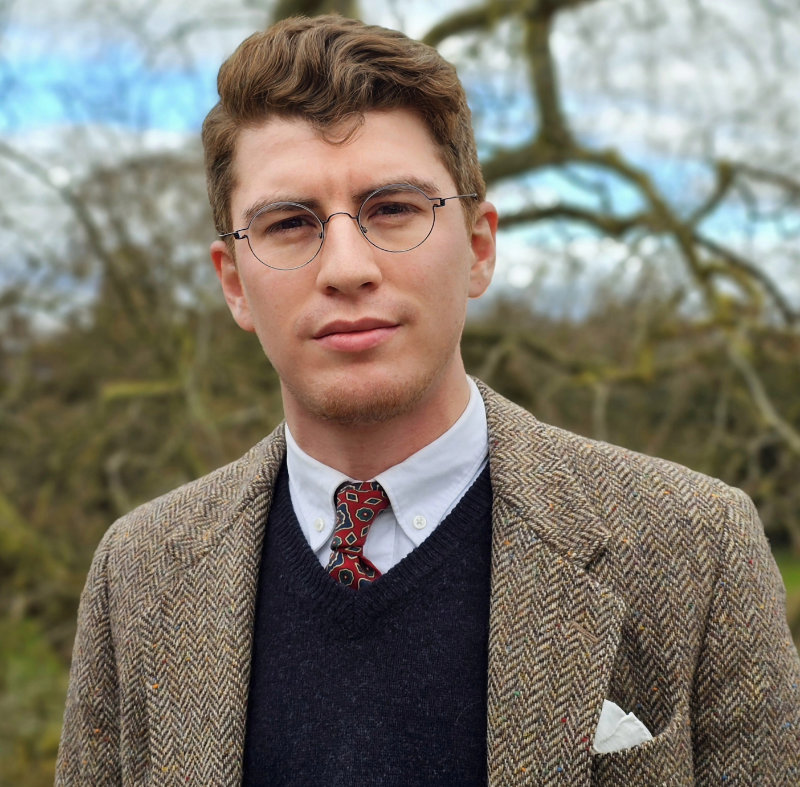
S. Furkan Ozturk
Assistant Professor of Geobiology and Geochemistry; William H. Hurt Scholar
Quo Vadis: The Origin of Life on Earth
The origin of life on Earth is one of the biggest unsolved mysteries in science and can only be tackled through an interdisciplinary approach. Moreover, if the origin of life is a planetary phenomenon, the underlying processes are constrained by their geochemical environments, strongly implying the need for an iterative approach between laboratory studies and field investigations. I will discuss the state of the art in the field, with remarks on early Earth’s environments, prebiotic chemistry, and our group’s recent work on the single-handedness of biomolecules.
Biography
S. Furkan Ozturk is an Assistant Professor of Geochemistry and Geobiology and a William H. Hurt Scholar at the California Institute of Technology, where he leads the Ozturk Lab in the Division of Geological and Planetary Sciences. He received his BS in Physics from Bilkent University in 2018 and his PhD in Physics from Harvard University in 2024, where he was awarded the Goldhaber Prize for his doctoral thesis on the origins of life’s homochirality. Following his PhD, Dr. Ozturk held postdoctoral research positions as a Kavli–Laukien Fellow at the Harvard College Observatory and jointly as a Research Fellow at King’s College, Cambridge in the UK. He joined Caltech in 2025. Dr. Ozturk is an interdisciplinary researcher whose work explores the physical mechanisms that link biochemical and geological processes, with the overarching goal of understanding how these mechanisms shape the dynamics and organization of complex natural systems. His research focuses, in particular, on the origins of life, biomolecular homochirality, and the role of spin-dependent phenomena in biochemistry and geochemistry.

Pamela J. Bjorkman
David Baltimore Professor of Biology and Biological Engineering; Merkin Institute Professor
A COVID-19 Booster Shot That Could Prevent the Next Zoonotic Spillover from Starting a Pandemic
Despite successful COVID-19 vaccines, there is an urgent need to combat future SARS-CoV-2 variants and spillovers of SARS-like betacoronaviruses (sarbecoviruses) threatening global health. We designed protein nanoparticles that present eight randomly arranged sarbecovirus spike receptor-binding domains (mosaic-8 nanoparticles) to elicit immune responses against regions that are conserved and relatively occluded rather than variable, immunodominant, and exposed. Mapping experiments demonstrated increased targeting of conserved regions after immunization. Our results suggest that vaccination with mosaic-8 nanoparticles could protect against SARS-CoV-2 variants and future sarbecovirus spillovers from causing another pandemic.
Biography
Dr. Bjorkman is the David Baltimore Professor of Biology and Biological Engineering and a Merkin Institute Professor at Caltech. She received a B.A. in Chemistry from the University of Oregon and a Ph.D. in Biochemistry from Harvard University. As a graduate student and postdoctoral fellow in Don Wiley’s laboratory, she solved the first crystal structure of a human histocompatibility complex molecule. She continued her postdoctoral training at Stanford with Mark Davis, where she worked on T cell receptors. She joined the faculty of Caltech in 1989. Dr. Bjorkman is a member of the US National Academy of Sciences, the American Academy of Arts and Sciences, and the American Philosophical Society. She received the William B. Coley Award for Distinguished Research in Fundamental Immunology (1993), the Gairdner Foundation International Award (1994), the Paul Ehrlich and Ludwig Darmstaedter Award (1996), the Max Planck Research Award (2002), the University of Oregon Department of Chemistry Alumni Achievement Award (2003), was the L’OREAL-UNESCO Women in Science North American Laureate (2006), received an NIH Director’s Pioneer Award (2010), the Ceppellini Award (European Federation for Immunogenetics) (2019), was a Citation Laureate in Physiology or Medicine (2020) and received the Delphine Parrott award and the Pearl Meister Greengard prize (2021), the Emory Max Cooper Prize in Immunology (2024), and the Wolf Prize in Medicine (2025). Dr. Bjorkman’s laboratory investigates the structural correlates of broad and potent antibody-mediated neutralization of HIV-1 and SARS-CoV-2 to inform immunogen design. In related work, they use 3D imaging techniques such as electron tomography to investigate HIV/SIV or SARS-CoV-2 infection in tissues and cells.

Chiara Daraio
G. Bradford Jones Professor of Mechanical Engineering and Applied Physics; Investigator, Heritage Medical Research Institute
Redefining Matter Through Geometry: Bridging the Solid-Fluid Divide
When we think of engineering materials, we often picture solid blocks such as steel or plastic with fixed properties—soft, lightweight, or strong. In contrast, granular materials such as sand or rice flow and shear. What if a material could do both? Polycatenated Architected Materials (PAMs) are a new class of structures that bridge the gap between solids and fluids. Made of interlocked particles forming intricate 3D networks—akin to modern-day chainmail—PAMs can switch from flowing like granular matter to behaving as solid elastic materials, depending on the applied forces. This unique duality defies conventional theories and enables applications ranging from safer sports gear, reconfigurable robotics, and smart devices for extreme environments. Join us to discover how the geometry and topology of PAMs are redefining what’s possible in material science and engineering.
Biography
Chiara Daraio is the G. Bradford Jones Professor of Mechanical Engineering and Applied Physics and a Heritage Medical Research Institute investigator at Caltech. Her work is focused on developing new materials with advanced mechanical and sensing properties, for application in robotics, wearable devices, and vibration absorption. She received her undergraduate degree in Mechanical Engineering from the Universita’ Politecnica delle Marche, Italy (2001) and her MS (2003) and PhD degrees (2006) in Materials Science and Engineering from the University of California, San Diego. She joined Caltech in fall of 2006 and was promoted full professor in 2010. From 2013 to 2016, she served as Professor of Mechanics and Materials at ETH Zürich. She received a Presidential Early Career Award (PECASE) from President Obama and was elected as a Sloan Research Fellow. Her work has been highlighted by media outlets such as The New York Times and Scientific American, and she has appeared on television and radio programs, including CNN and PBS. Chiara also serves as a Director of Research at Meta Reality Labs.

Sergei Gukov
John D. MacArthur Professor of Theoretical Physics and Mathematics
The Role of AI in Mathematical (re)search
At its core, scientific research is a search — a search for new ideas, new patterns, and new ways to explain or prove things. In this talk, I invite you to explore how AI is reshaping different stages of this process. We will see that while AI excels at many tasks, it still hesitates on others, such as long-horizon reasoning or far-out-of-distribution generalization. I view this as good news: it highlights how much meaningful AI research remains to be done. In fact, the goal of expanding AI’s role in mathematical research has become a motivation for advancing AI itself. I am genuinely excited that these two fields have come into such close contact over the past few years.
Biography
After receiving his PhD from Princeton University, Sergei Gukov spent five years at Harvard University as a research fellow of the Clay Mathematics Institute and two years at the school of mathematics at the Institute for Advanced Studies, Princeton. His passion is building new bridges between different areas of mathematical physics and pure mathematics, such as quantum topology, mirror symmetry, and gauge theory. His more recent interests involve new connections between mathematics and machine learning.
Student Programs
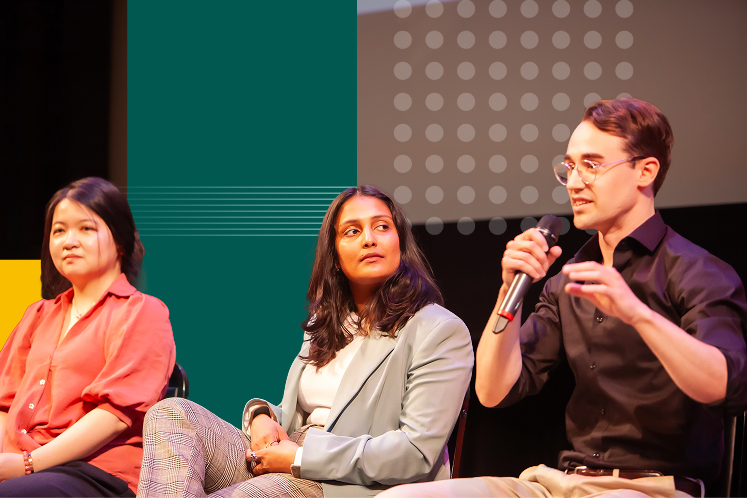
Seminar Day’s elective sessions showcase exceptional student research and communication. Choose from three programs running concurrently during the elective blocks.

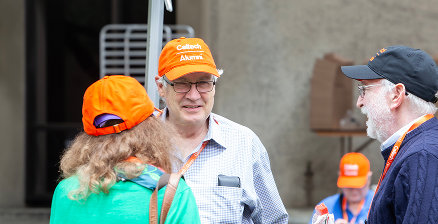
3MT Challenge
Watch graduate students present their research in just three minutes—no jargon, no slides, just clear and compelling storytelling. Part of a global competition designed to make academic research accessible to any audience.
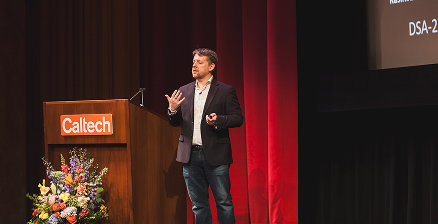
Everhart Lecture
Hear from a 2026 Everhart Finalist in this special lecture for the Caltech community. The Everhart series recognizes graduate students who combine outstanding research with exceptional presentation skills, addressing current scientific questions at a level accessible to all fields.
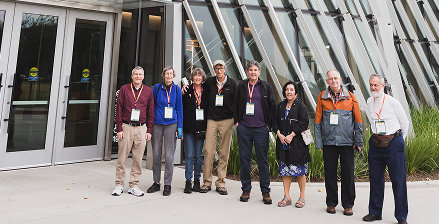
Perpall SURF Speaking Competition
Meet a winner of the Perpall SURF Speaking Competition, selected from nearly 200 undergraduates who presented their summer research. Established in 1993 to honor effective science communication, the Perpall competition has become one of Caltech’s most prestigious undergraduate honors.
FAQs
Registration, virtual access, or accessibility questions?
Start here.