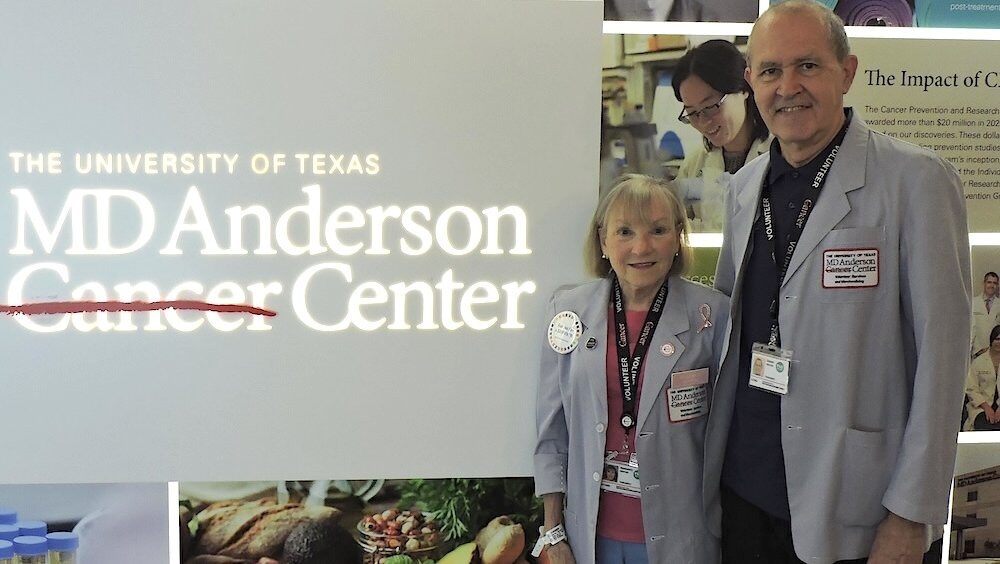
Imagine a future in which breast cancer is detected through a blood or urine sample before physical signs of the disease have emerged. If that vision one day becomes reality, it may be due in part to the curiosity and generosity of Rosemary and Donald Herron.
In fall 2024, Rosemary read an article in Caltech Magazine about how researchers at the Institute use mass spectrometers to measure the ratio of isotopes—atoms of the same element that differ in their mass—within minerals, molecules, and other natural materials, providing insights into their histories. One of the researchers featured in the story was John Eiler, the Robert P. Sharp Professor of Geology and Geochemistry and Ted and Ginger Jenkins Leadership Chair in the Division of Geological and Planetary Sciences.
For decades, Eiler has applied stable isotope geochemistry to fundamental questions in earth and planetary sciences, using these techniques to investigate topics such as the body temperatures of dinosaurs, the origins of organic molecules in space, and the evolution of planetary atmospheres. In the magazine piece, Eiler said that the Orbitrap mass spectrometer, which he developed and refined with Thermo Fisher Scientific, had become sensitive enough to unlock vast amounts of information about metabolism and disease in the human body.
Soon after the article was published, the Herrons had lunch with Eiler. Rosemary asked about the Orbitrap’s medical applications. When Eiler mentioned a project in his lab focused on searching for the isotopic “fingerprints” of breast cancer, Rosemary and Don were immediately intrigued.