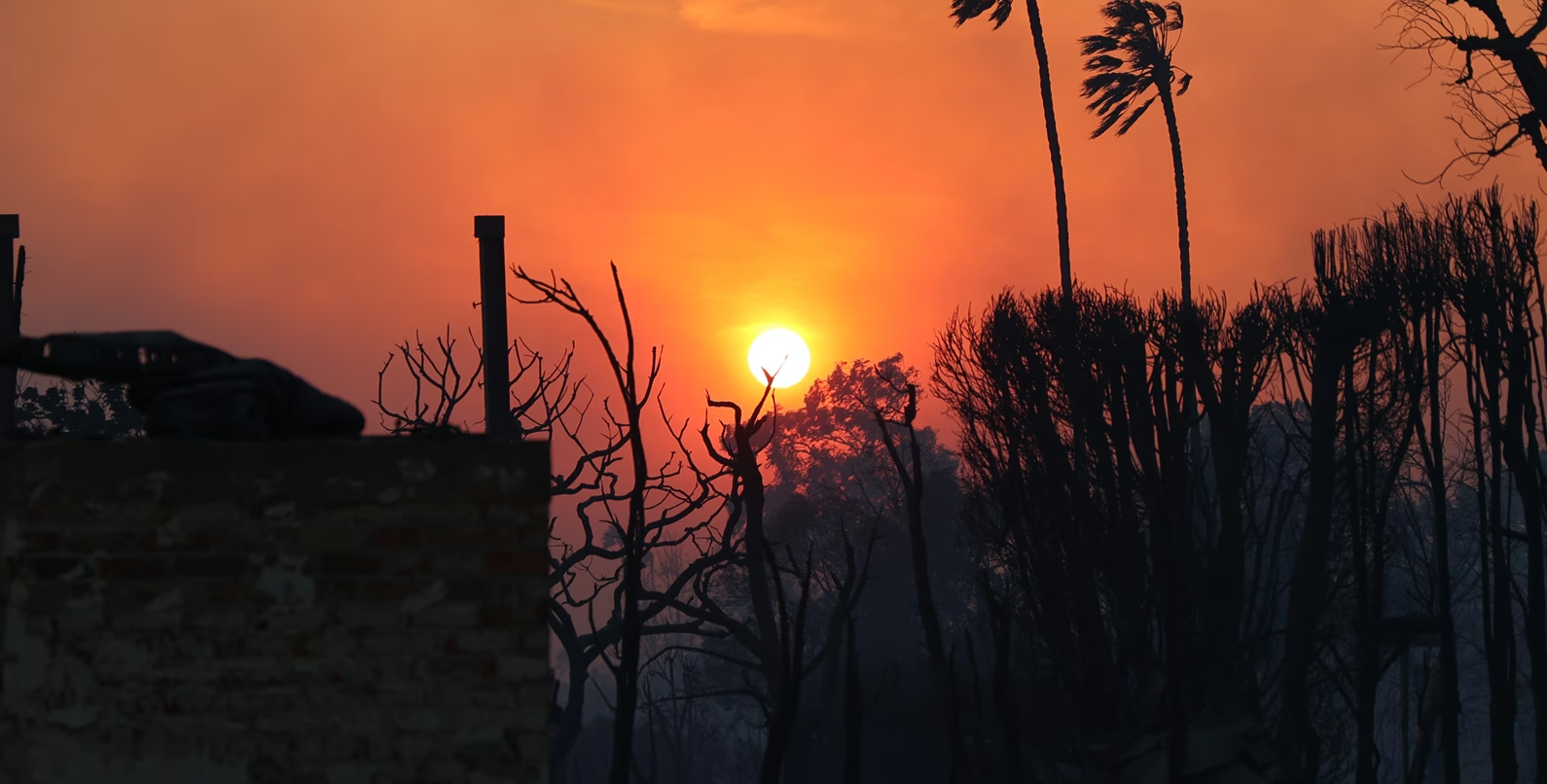
One year after the 2025 Los Angeles fires, Caltech researchers are pressing forward with research projects to provide answers in service of public health and safety. Through investigations that included testing for heavy metal contamination, monitoring air quality, and assessing the burn area’s erosion hazards, Caltech scientists immediately launched into action in the days and weeks following the fires, bringing scientific tools and expertise to tackle fundamental questions for the broader public—even as many of these individuals were impacted by the fires themselves.
“The Eaton and Palisades fires were a tragedy for so many in the Caltech-JPL community as well as our many friends and neighbors, yet that disaster inspired some of the most magnanimous acts of good will I’ve personally experienced,” says John Eiler, the Robert P. Sharp Professor of Geology and Geochemistry and Ted and Ginger Jenkins Leadership Chair of the Division of Geological and Planetary Sciences (GPS). “Our community came together to help each other with housing and all manner of other needs, while simultaneously directing our skills and energy as scientists at societally important problems created by the fire—the unique and poorly understood sources of pollution, life-threatening debris flows, and more. This scientific effort addressed questions faced by everyone living in the Los Angeles region, involved truly remarkable innovations and discoveries, and provided a much-needed means for us to focus our attention on helping others. The action of the Caltech community, particularly the program of rapid response research, required a tremendously open-hearted outpouring of support from friends of the institute, and I think was possible only because our small size and close connections with each other allowed us to mobilize for science in service to the community.”